
Tick Safety & Disease Prevention
As the weather warms up across Vermont, many of us are spending more time outside with our dogs hiking, walking trails, playing in the yard, and enjoying everything spring and summer have to offer. Unfortunately, warmer weather also means tick season is here.
Ticks are extremely common throughout Vermont and can carry dangerous diseases that affect both pets and humans. The good news is that prevention and early detection can make a huge difference.
Why Ticks Are a Big Problem in Vermont
Vermont’s wooded areas, tall grass, leaf litter, and damp environments create the perfect conditions for ticks to thrive. Even dogs that mostly stay in their own yard can still be exposed.
Common ticks found in Vermont include:
Deer ticks (black-legged ticks)
Dog ticks
Lone star ticks (becoming more common in some areas)
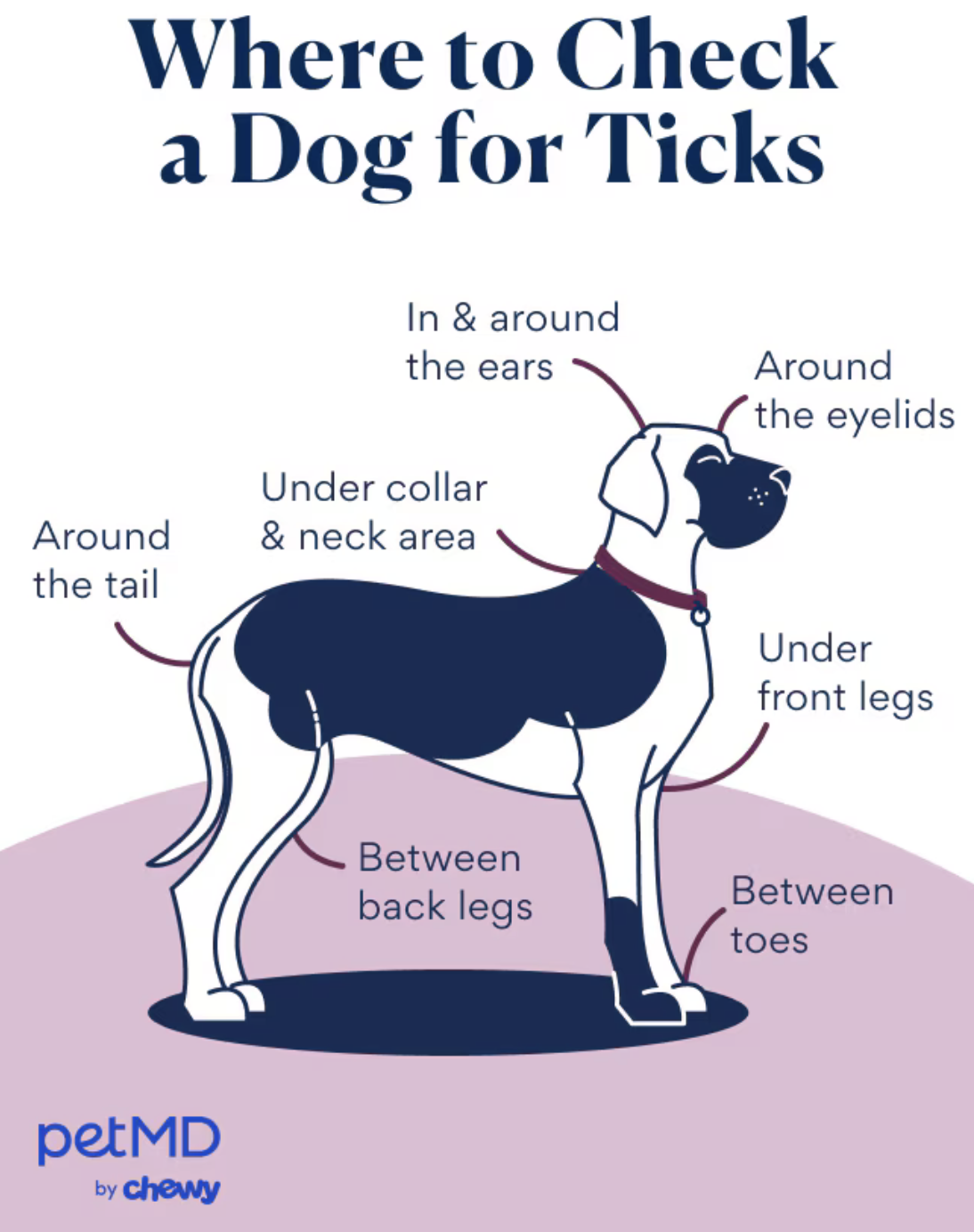
Diseases Ticks Can Spread to Dogs
Ticks can transmit several serious illnesses. Some dogs show symptoms quickly, while others may not appear sick for weeks or months after a tick bite, including:
Lyme Disease -One of the most common tick-borne diseases in Vermont. Symptoms may include:
Limping or lameness
Fever
Lethargy
Swollen joints
Loss of appetite
Anaplasmosis - Can cause:
Joint pain
Weakness
Fever
Vomiting
Ehrlichiosis - Though less common in Vermont, it can still occur and may cause:
Bleeding issues
Fever
Weight loss
Fatigue
How to Protect Your Dog From Ticks
Tick prevention is one of the most important things pet owners can do during Vermont’s warmer months. Use Tick Prevention Consistently even in the winter months.
Talk to your veterinarian about:
Oral tick preventatives
Topical treatments
Tick collars
Different dogs have different needs, so finding the right product matters.
Keep Your Yard Maintained
Simple yard maintenance can help reduce tick exposure:
Keep grass short
Remove leaf piles
Trim brush and overgrowth
Create barriers between wooded areas and play spaces
How to Remove a Tick Safely
If you find a tick on your dog:
Use fine-tipped tweezers
Grab the tick close to the skin
Pull straight outward slowly and steadily
Clean the area afterward
Monitor for redness or illness
Avoid:
Burning the tick
Twisting it
Smothering it with oils or chemicals
If you’re unsure how to remove it safely, contact your veterinarian.
Early Prevention Saves Lives
Tick-borne illnesses can become serious if left untreated, but many are manageable when caught early. Staying proactive with prevention, regular checks, and veterinary care can help keep your dog healthy all season long.
At Paws of Promise, we encourage all pet owners to stay informed and prepared during Vermont’s busy tick season. At your annual vet exam, your vet typically will recommend a heartworm/lyme disease test, if your dog is positive, listen to your vet and manage the disease right away.